
Advanced ATC Academy’s CTO-P Program
A Faster Path to Becoming an Air Traffic Controller

The aviation industry is facing one of the largest air traffic controller shortages in modern history. As demand for qualified controllers continues to grow across both Federal Contract Towers and the Federal Aviation Administration (FAA), aspiring controllers are searching for training programs that provide more than classroom theory alone. They need real preparation, real simulation, and a real pathway into the workforce.
That is exactly why Advanced ATC created the CTO Partnership Program, commonly known as CTO-P.
What Is the CTO-P Program?
The CTO Partnership Program at Advanced ATC is an accelerated, immersive air traffic control training program designed to prepare students for careers in contract towers and eventually the FAA. Conducted at Craig Field in Selma, Alabama, the program combines classroom academics, high-intensity simulation training, and direct industry partnerships to bridge the gap between training and employment.
Unlike many traditional aviation education pathways, the CTO-P program focuses on operational readiness from day one. Students are not simply learning theory; they are learning how to think, communicate, and perform like professional air traffic controllers.
The program is built around one core belief:
Controllers are made, not born.
Why the CTO-P Program Is Different
Many aviation programs provide academic exposure to air traffic control concepts. Advanced ATC’s CTO-P program goes much further by emphasizing measurable skill development, high-fidelity simulation, and professional performance standards that mirror live tower operations.
The program includes:
• Intensive classroom instruction
• FAA CTO written exam preparation
• High-volume tower simulation scenarios
• Scenario-based decision making
• Real-world phraseology training
• Professional communication development
• Non-cognitive skills evaluation and improvement
• Exposure to live operational environments
Students are trained in the same fast-paced, high-pressure decision-making environments they will encounter in actual tower operations.
A Program Built Around Real Training
Weeks 1–6: Academic Foundation
During the first phase of training, students focus on the fundamentals of air traffic control, including:
• Airspace and airport operations
• FAA regulations and procedures
• Separation standards
• VFR and IFR operations
• ATC phraseology
• Flight progress strips and coordination
• Publications and operational manuals
• FAA CTO written exam preparation
Students are expected to meet rigorous academic standards throughout the program.

Weeks 7–11: Advanced Simulation Training
The second phase transitions students into immersive tower simulation training. Students spend approximately 100 hours working realistic traffic scenarios designed to replicate live tower operations.
Simulation training focuses on:
• Clearance Delivery
• Ground Control
• Local Control
• Traffic sequencing
• Emergency situations
• Weather impacts
• Coordination and workload management
• Professional position relief briefings
Every scenario is designed to improve not only technical ability, but also the non-cognitive skills critical to controller success, including situational awareness, adaptability, prioritization, communication, and stress management.
More Than a Certification
The CTO-P program is not designed to simply help students pass a test. It is designed to help students become capable, employable, and confident professionals.
At Advanced ATC, students are held to professional standards from the beginning. Attendance, communication, preparation, professionalism, and performance all matter.
The program is often described internally as a “11-week job interview.”
Students who embrace the intensity of the program frequently leave with:
• Stronger operational confidence
• Improved communication skills
• Enhanced situational awareness
• Realistic understanding of tower operations
• Valuable professional experience
• Career opportunities within the industry
The Importance of Simulation-Based Training
Advanced ATC has long advocated for the importance of simulation-driven controller training. The academy’s philosophy is rooted in research surrounding non-cognitive air traffic control skills training and reducing time to certification.
Through repeated exposure to realistic scenarios, students build operational instincts and decision-making habits that traditional lecture-only environments often cannot provide.
This approach helps accelerate learning while preparing students for the realities of live traffic operations.
A Growing Need for Air Traffic Controllers
The need for qualified controllers continues to rise nationwide. Contract towers and FAA facilities alike are seeking trained professionals who can adapt quickly and perform under pressure.
Programs like CTO-P are helping address that shortage by preparing students faster, more effectively, and with greater operational focus.
For students seeking a direct, career-focused pathway into air traffic control, the CTO Partnership Program offers an opportunity to train in a demanding, realistic, and highly supportive environment designed around industry success.
Your Future Starts Here
Air traffic control is one of the most challenging and rewarding careers in aviation. It requires discipline, communication, focus, and the ability to make critical decisions in real time.
The CTO Partnership Program at Advanced ATC was built to develop those skills and prepare the next generation of air traffic controllers for success.
If you are ready to pursue a career in aviation and want training that emphasizes real preparation, real simulation, and real opportunity, the CTO-P program may be your next step.
What Happens After Graduation?
After you successfully complete the program, we’ll help you take the next step toward your career.
Step 1: Interview with Employers
You’ll interview with one of our hiring partners. We help you prepare by providing:
- Resume assistance
- Interview coaching
- Guidance throughout the hiring process

Step 2: Receive a Job Offer
Many of our graduates receive job offers after completing the program.
Job offers are contingent upon:
- Passing a background check
- Passing a drug test
- Receiving an FAA Class II Medical Certificate
Step 3: Start Your Air Traffic Control Career
If hired, you’ll begin working at a contract air traffic control tower.
You’ll complete approximately 6 months of paid on-the-job training before earning your Certified Tower Operator (CTO) Certificate.
Why Are Companies Hiring Our Graduates?
There is a nationwide shortage of Air Traffic Controllers.
Contract towers across the country need qualified controllers and are actively hiring. Our program provides the classroom instruction and simulation experience employers are looking for, giving graduates a strong pathway into the profession.
“While no school can guarantee employment, our graduates have historically received job offers after successfully completing the program and meeting all hiring requirements.”

Advanced ATC Training Highlights
Advanced ATC is your solution for all the tools necessary to achieve your Control Tower Operator certification.
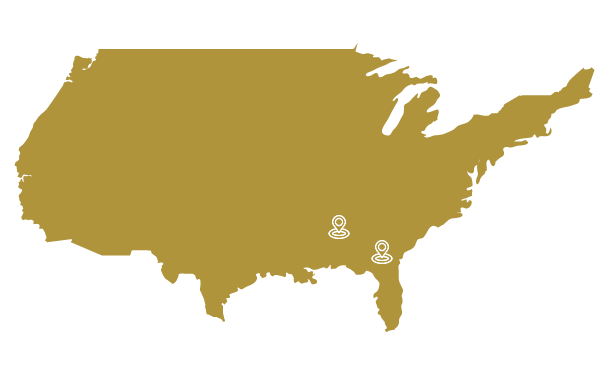
Campus locations
Air Traffic Controllers are the unsung superheroes of our skies; working tirelessly behind the scenes to ensure the safe and efficient movement of aircraft.
USA (2 Locations)
Cayman Islands